What are the advantages of graphite crucible compared with ceramic crucible for experiment
Oct 14, 2023
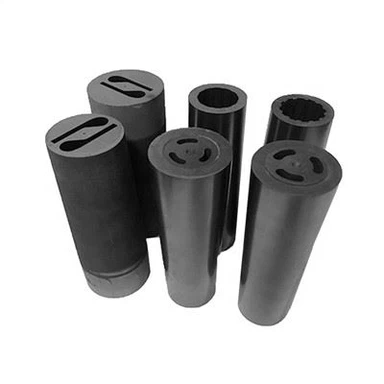
Graphite crucible is a crucible commonly used in laboratories, usually made of graphite. Compared with ceramic crucible, graphite crucible has obvious advantages.
First of all, the graphite crucible has a high heat resistance. Graphite has a high melting point and thermal stability, so it can maintain its structure and properties at high temperatures and is not easy to melt or deform. This makes the graphite crucible an ideal vessel for high temperature experiments. In contrast, ceramic crucibles have low heat resistance and are often prone to cracking or crushing at high temperatures.
Second, the thermal conductivity of graphite crucible is better. Because graphite has good thermal conductivity, the heat from the heat source can be quickly transferred to the experimental material, thus achieving rapid heating. This is very important for some experiments that require rapid heating, which can save experimental time and improve experimental efficiency. In contrast, the ceramic crucible has poor thermal conductivity, slow heating speed, and takes a longer time to achieve the same heating effect.
Third, the chemical inertness of graphite crucible is high. Graphite has high corrosion resistance, can resist the erosion of most chemical solutions, and will not affect the experimental results due to reaction with experimental substances. This makes the graphite crucible suitable for a variety of chemical experiments, especially those requiring contact with highly corrosive substances such as acids and alkalis. The ceramic crucible will have a chemical reaction when it comes into contact with some highly corrosive substances, thus affecting the experimental results.
In addition, the mechanical strength of the graphite crucible is higher. Graphite has good toughness and impact resistance, so it is not easy to crack or fracture. This allows the graphite crucible to have a long service life and to withstand multiple uses and cleaning processes, while reducing the risk of accidental damage during experiments. In contrast, ceramic crucibles may be more likely to crack or break and require more careful use and handling.
Graphite crucible has low adsorbability. The surface of graphite does not easily absorb gases or chemicals, so it can maintain the purity of the experimental environment without affecting the experimental results or causing bias. This is very important in some experiments that require a high experimental environment, especially those that need to maintain a high purity sample. In contrast, ceramic crucibles have high adsorbability and are easy to adsorb gases or chemical substances, which may adversely affect the experimental results.
In summary, compared with ceramic crucible, graphite crucible has certain advantages in heat resistance, thermal conductivity, chemical inertia, mechanical strength and adsorption. These advantages make the graphite crucible a widely used experimental vessel in the laboratory, which can meet the needs of various experiments and provide accurate and reliable experimental results. However, we also need to select the appropriate crucible material according to the specific experimental requirements and conditions to ensure the smooth progress and accuracy of the experiment.