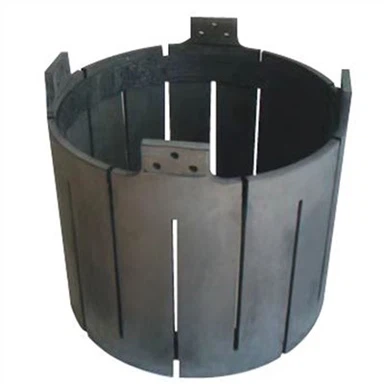
Application of graphite mold in glass blowing
Apr 24, 2023
Graphite mold is widely used in glass blowing due to its unique advantages. First of all, graphite has a high melting point and excellent thermal conductivity. This makes it not only able to withstand high temperatures during glassblowing, but also to transfer heat quickly and evenly from the hot glass to the cool surfaces of the mold. This ensures that the shape of the mold is preserved and the glass retains its desired shape and dimension.
Secondly, graphite material is a non-reactive and non-wetting material with glass. This means that it will not react chemically with the hot glass, and it will not stick or fuse with the glass even when it is heated to high temperatures. This allows the glassblower to easily remove the finished product from the mold without damaging it.
Furthermore, graphite molds have a smooth and uniform surface that can produce a flawless glass product with no visible marks or lines. This saves time and effort for glassblowers, eliminates the need for post-processing, and produces a higher quality finished product.
In addition to these advantages, graphite molds have a wide range of applications in glassblowing. They can be used for making various shapes and sizes of glass objects such as vases, bowls, bottles, and even complex scientific instruments. With the help of CAD software, it is possible to make complex graphite molds that would be difficult or impossible to achieve with other materials.
Moreover, graphite molds are durable and can be reused many times. They can withstand multiple cycles of heating and cooling and still maintain their shape and integrity. This makes them a cost-effective option for glassblowers, as they do not need to constantly replace their molds.
Overall, the use of graphite molds in glassblowing offers numerous benefits and has become an essential tool for glassblowers to produce high-quality and intricate glass objects.